




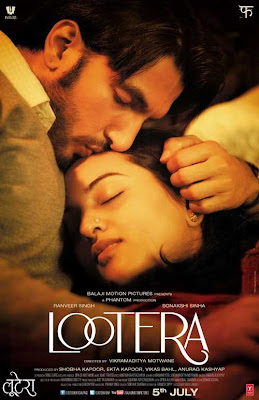
 ; Not Rated
BUY THE:
POSTER!
DVD!
BLU-RAY!
SOUNDTRACK!
SHORT STORY!
AUDIOBOOK!
It is that last idea, trust, that truly characterizes and defines Lootera. The term in its most literal meaning does play a crucial part in the film, not only in its key pre-intermission plot turn (which the film doesn't exactly make a secret, given its title, which translates into English as "Robber"), but the highly affecting and effective change in direction for its second half. After a year apart, coincidence (or, perhaps more fittingly, karmic circumstance) brings Varun and Pakhi back together, but neither are in quite the same place, literally and figuratively. An isolated cabin in hills of Dalhousie is the appropriately wintry, washed-out and desolate landscape for their reunion, mirroring the contrast between the idyllic, idealistic past and the stark reality a present where the two are both weighed down and defeated by the baggage of heartbreak, bitterness, desperation, and regret. That all of these are only magnified, rather than soothed, by being in the other's presence highlights the character-driven intelligence and emotional honesty that Motwane, Kashyap, and co-writer Bhavani Iyer lend their characters and story. If there is to be any chance of a slightly happy ever after for these two, both must let go of each other's broken ideal of the other and earn that trust anew, and the progress of this struggle is one traced not so much through the spoken dialogue (which becomes even more sparse than it already is post-interval) than action and, above all, facial expression.
And this is where the most remarkable and rewarding show of trust comes in: that of Motwane in the abilities of his lead pair, who carry off the incredibly daunting demands to surprising, if not downright shocking, effect. Singh and Sinha are both still very much newcomers to the acting scene, having achieved major stardom only in literally the last couple of years--and even then in roles that made full use of their undeniable charisma and natural movie star presence but didn't exactly display, much less test, their true acting chops. Without the safety net of the splashy, flashy dance numbers in which they both excel, Singh and Sinha are, quite simply, a revelation, with Motwane rather cannily shaping the progression of the story and their performances for optimal impact. The simple, low-key sincerity of Singh and Sinha of their first half work gently eases the viewer into a comfortable connection with their characters, which make transition to darker, rawer shadings in their actions, thoughts, and beliefs--which are all deeply rooted in and informed by fine details in their established first half characterizations--that much more powerful. Even when the necessary confrontations and releases do come, Motwane keeps the melodramatics to a minimum, these beats lent their poignance through the complex, introspective nuances of the performances. Varun and Pakhi are imperfect, multi-dimensional people in an equally complicated and messy emotional situation, and Singh and Sinha vividly depict the urgency and pain of their external and internal conflicts without falling back on loud but empty histrionics.
The ultimate act of trust is Motwane's in the audience, to remain alert and attentive throughout his film's deliberate paces as its momentum steadily builds to an unconventional and altogether astonishing payoff: the collective atmosphere of characterizations, conversation, cinematography, and Amit Trivedi's beguiling aural massage of a score (with inspired and insightful lyrics by Amitabh Bhattacharya) all come together in an elegantly constructed and executed climax of exponential catharsis. Even what initially have appeared to be flaws to some reveal themselves to be astute choices in context; case in point, Trivedi's own vocals on the climactic ballad "Zinda" ("Alive"), which have been criticized as somewhat detached in delivery but end up perfectly underscoring (literally and figuratively) the casual, unhesitant motivation behind the simple yet beautiful and exquisitely profound gesture it accompanies. It's not at all trite to state that by the indelibly, hauntingly, transcendently bittersweet end of Lootera, everything magically falls into place, for there is true magic in Motwane's mastery in crafting a such a poetic, passionately felt, and perfectly realized work of art.

Buy the Lootera movie poster here.
Buy the Lootera DVD here.
Buy the Lootera Blu-ray here.
Buy the Lootera soundtrack here.
The Movie Report wants to attend all your film premieres and special events! Please send any and all invitations to this address. Thanks!


